
Glenn Lindgren: We get many, many requests for pastele or pastelito recipes.
Jorge Castillo: Everybody misses these great Miami favorites.
Glenn Lindgren: Basically, pastelitos use a variation of puff pastry, and learning how to make it is considered quite an accomplishment in most cooking schools!
Jorge Castillo: The bakeries also have professional equipment that makes the entire job a lot easier!
Glenn Lindgren: If you can stomach a shortcut or two, we also present the easy way to make pasteles using frozen puff pastry...

Delicate puff pastries filled with tropical fruits, cream cheese, and even meat!
INGREDIENTS:
FILLINGS (See recipes here):
guava
coconut
cream cheese
meat (carne)
Make sure you refrigerate your butter so it is completely solid! We have tried both salted and unsalted butter, and there is little difference. The salted butter produced a pastelito with a slightly better flavor.
Use a chilled work surface (a marble work surface works great) if possible and be sure you work in a cool room. This is not a recipe to make in a hot kitchen!
Use an electric mixer to blend one cup water and the lemon juice with 1/2 cup of the butter and the salt. Gradually blend in the flour. You will have a lumpy mess but don't panic. Begin adding water, a little at a time until you get a smooth, workable dough -- similar in consistency to pie crust. Cover the dough with a moist cloth and let stand for 10 minutes or so.
With a rolling pin, roll out the dough on a lightly floured surface until you get a nice rectangle about 1/2-inch thick. Refrigerate.
Place the remaining butter in a bowl and knead it together with about 1/3 cup of flour added very gradually. You need to create a pliable mixture without letting the butter become completely soft. So if the mixture gets too warm before you get a nice pliable mixture, put the bowl in the refrigerator to re-chill.
Take a piece of baker's parchment that is about two thirds the size of the dough you rolled out. Spread the butter and flour mixture evenly on the parchment until you get a smooth and even surface. Refrigerate immediately for 20 to 30 minutes.

This new Kindle version contains all of the recipes and editorial copy from the original print edition. As a bonus, the new Kindle edition includes 14 new photos of the prepared dishes.
Use the FREE Kindle Reading App and view our cookbooks on your notepad, tablet, laptop, or computer.

Take the refrigerated dough you rolled out and place on your well-floured work surface. Remove the parchment from your butter block and place on top of the dough. The butter should cover two thirds of the dough surface. Leave about 1/2 inch space on each side of the butter. The reason for this will become apparent as you follow the remaining steps.
Take the part of the dough that is NOT covered with butter and fold it over so that it covers one-third of the butter-covered part. Take one-third of the butter covered section and fold over the top of your first fold. With your hands, press along all edges to seal completely. Now rotate the dough 90 degrees, so that the seam runs perpendicular to you.
Lightly dust with flour and roll out to about 1/4-inch thick. When folding and rolling, the idea is to roll the dough out to approximately the same size rectabgle you had before you made the folds.
Now, fold the two ends together like a book, and fold in again -- this is called a four fold. (See Diagram below.)
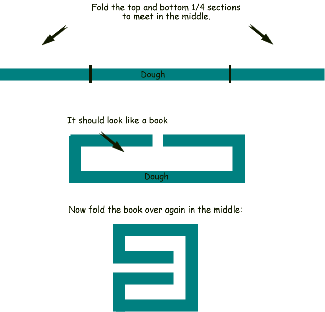
Once you make your four fold, place the dough on a sheet tray and refrigerate for 30 minutes.
Remove dough from refrigerator, place on floured work surface, lightly dust with flour and roll out to about 1/4-inch thick and to the same size as your original rectangular sheet. Fold one-third of the dough into the middle. Cover with remaining third. Place the dough on a sheet tray and refrigerate for 30 minutes.
Remove dough from refrigerator, place on floured work surface, lightly dust with flour and roll out to about 1/4-inch thick and to the same size as your original rectangular sheet. Fold the two ends together like a book, and fold in again (another four fold -- see diagram above.) Place the dough on a sheet tray and refrigerate for 30 minutes.
Now we get to roll out the dough one last time! Remove dough from refrigerator, place on floured work surface, lightly dust with flour and roll out to about 1/4-inch thick and to the same size as your original rectangular sheet..
Cover and refrigerate one hour (or more) before using. The dough may also be wrapped in plastic and frozen in sheets for later use.
You can find both retail and commercial versions of frozen puff pastry. That's right, your favorite Miami baker may just have a little secret he or she isn't telling you about.
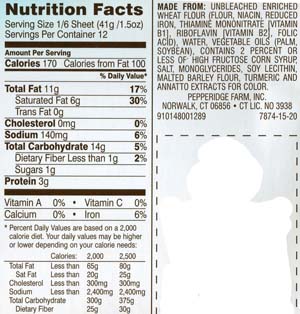
One of the most widely available retail frozen puff pastry products is from Pepperidge Farm. These can be found in the frozen section of just about every grocery -- usually near the frozen pies.
There is no butter at all in this product, so the flavor profile is different. If you haven't had a good pastelito in awhile, you might not even notice a difference!

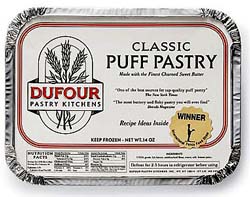
A classic all-butter puff pastry can be found in many gourmet shops: Dufour Pastry Kitchens makes this great pastry for the ultimate pastelito.
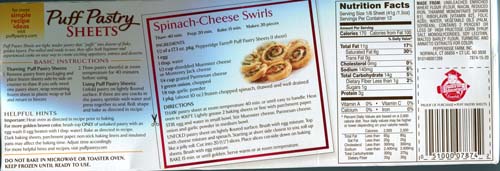
Follow the package directions to thaw and unroll; then use the dough as described below for the various pastelito types.
See PAGE 2 for recipes for the various Pastelle Fillings!
Drinks | Appetizers | Salads | Main Dishes| Soups | Side Dishes | Desserts | Index



Cuban, Spanish, and Latin American food recipes, Miami/Little Havana Travel Guide, Miami Restaurant Guide, Hispanic Culture & Food
No copying or commercial duplication of any content (including photos) without the express written permission of the authors and proper attribution.